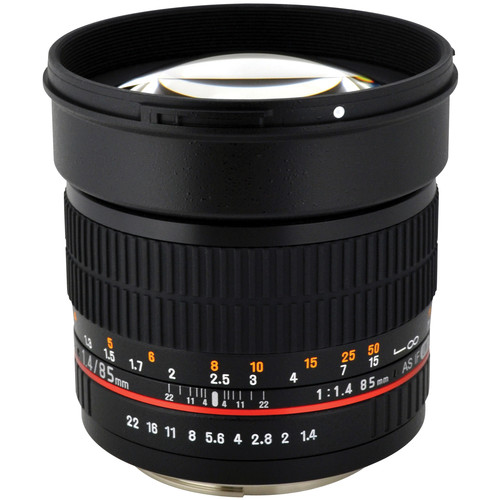
Hello friends, hope you might have enjoyed the Part I of this basics. It is good to write down some more basics in this post. I would be happy to add more stuffs based on your questions as well. So, please share your comments and raise your questions in comments section. Here, i am going to cover the secondary stuffs one need to understand if he/she is looking for technical portion of photography.
We are going to cover items such as Focal Length, Image Stabilization, Aperture, Shutter Speed, Modes, ISO, Auto Focus, Manual Focus, Focus Points, Prime and Zoom Lenses, Fast Lens, Focal Length Range and its application etc.
Focal Length
Angle of view and Focal Length goes together in photography. Wide Angle to Ultra Zoom and similarly 10mm to 1000mm are the examples for Angle of View and Focal Length respectively.
Before taking any photo, the photographer should know what kind of picture he is going to take and accordingly he need a lens with that focal length usually specified in mm.
Camera's Crop Factor
Generally any DSLR camera can be classified into Full-Frame or APS-C Format or Micro-Four Thirds etc.. These are the terminologies used in photography to refer the Image Sensor Size built into the Camera Body.. Old days, they always use 35mm films such as Kodak, Fujinon etc with different sensitivity for different application. On the invent of digital SLR, the images will be captured through the sensor of varied sizes... Full-Frame is (35 mm), APS-C (1.6 times of 35 mm), Micro-Four Thirds (2 times of 35 mm) and Medium Format (0.5 times of 35 mm)..
What does that mean? It increases the effective focal length directly based on what Camera Body we are using.. Using a 35mm lens on APS-C sized camera (Canon T2i, Nikon D7100 etc) will increase the effective focal length of the lens to 35 * 1.5 ~ 52.5mm roughly. So, that introduces the picture taken with a little more Zoom Range. We may be thinking, we are taking a picture on 35mm lens, in fact, it is equivalent to taking a picture with 53mm lens on Full Frame Camera (Canon 5dMkIII etc).
For more details about the crop factor, please check the link crop size
Aperture
Aperture can roughly termed as a hole inside the lens, not in the camera that lets the light to reach the camera sensor.. Good news is, by controlling aperture we can control letting the light to reach the sensor. If the aperture hole is bigger in diameter, more light falls into sensor and vice versa. Usually maximum aperture is specified as F1.4 F2.8 (aka Fast Lenses) and minimum aperture is specified as F 22. Aperture size also has ranges such as F2.8, F3.2, F4, F5.6, F6.3, F8, F16, F22 with F2.8/3.2 as maximum to F16/F22 as minimum. They call each calibrated number as one f-stop... Turning aperture dial from F2.8 to F5.6 or F3.2 to F6.3 is '1 F-Stop'.. This means, the lighting will be reduced by 1 F-Stop... This aperture is one way of controlling the light for your photography.
Shutter Speed
Shutter is a small mechanism in camera body which opens and closes when we click on the Shutter button on camera. This is another way of letting the light into the sensor (digital) or film (old cameras). Having said that, by controlling the shutter speed, we can control the amount of light falls on the sensor. Faster (1/2000) the shutter speed is lower the light intake will be. Slower (1/20, 1s etc) the shutter speed is, maximum light intake will be.
An important point to remember when adjusting the shutter speed is, when you go below 1/100, chances are that, there will be a blur in your picture if you hand-held the camera.. If mounted on a Tripod, even 1s will never make a blur..
So on a sunny day, there is no need to reduce the shutter speed. You can set it to 1/500 and above. On the contrary, on low-light conditions, it is not advisable to go beyond 1/100 depends on available light.
Mode
Camera Mode dial in each camera will be different. But most of the DSLRs will have preset modes (auto, action, portrait, macro), semi creative mode (Aperture Priority, Shutter Priority) and full creative (manual). Please refer your camera manual for getting a good understanding of this dial and modes.Depends on how you want to capture the moments, you can set the dial appropriately.
ISO
ISO is the sensitivity of the image sensor which is made of flip flops and transistors. Usually ISO ranges from 100 - 3200. In some camera, it will go upto 12600.. Usually lower the ISO, better the picture will be.. Grains on the picture will be low.. That said, one is good to go upto 800 depends on the lighting.. On worst lighting conditions, one can go to 1600 beyond which most of the camera introduces too much grains or noise in the picture that spoils it.
Auto Focus/Manual Focus
Usually there will be a jack on camera body to toggle AF/MF according to photographer's needs. Auto Focus works when focus points meeting the closest subject with a good contrast . Also, the DSLR lens such as EFS series on canon and equivalent in other brands will have a AF/MF switch on the lens as well. Manual focus let the users to rotate the focus ring on the lens and the focus assist point will do beep sound on meeting the subject.
Focus Points/Focus Assist
When we look through view finder or by pressing focus point button (check your camera manual to find this), we can see some points (9 points or 21 points based on different camera). These are focus assisting points which helps the photographer to focus the subject at specific part of the frame. Camera lets us to choose either all or specific point through some keys.
Image Stabilization (IS/OS)
This is a key concept that will help to take sharp pictures hand-held. This always comes as lens settings. There will be a counter shaking mechanism in the lens that counter acts when there is a shake by the photographer. This mechanism will also be referred as Optical Stabilization OS etc. IS when clubbed up with the silent focusing motor (USM or HSM or VSD in different brands).
Prime and Zoom Lens
Prime Lens are the lenses that are renowned for taking sharp pictures and always have only a specific focal length in mm. Lens such as 35 mm, 50mm, 85 mm, 100 mm are prime lens. Zoom lens are with focal length ranges such as 18-55mm, 55-250mm, 70-200 mm, 70-300 mm etc.When composing with prime lens, usually the photographer needs to move back and forth to get right composition. With zoom lens, it is easy to compose the pictures by rotating the zoom ring to suit appropriate focal length. Zoom lens are further classified into standard zoom (24-70mm), telephoto (70-200mm), ultra zoom (200 - 1000 mm).
Fast Lens
Fast lens are the lens with maximum aperture from f1.0 - f2.8. They are very good for low-light event photography or indoor sports photography.